
What does a cream consist of?
To make a cream, you first need to know what a cream consists of. Surely everyone has looked at the back of their cream at some point and discovered the long list of ingredients. The different long and chemical names are rarely understandable, which is why we make a simple classification into 5 groups here: water, fat/oil, glycerin, emulsifiers, and other ingredients. To make a cream, the first four components must be mixed in the correct ratio and adjusted according to the desired consistency.
Task: Which components of the cream serve which purpose and where do these components come from?
Try to assign the terms below the table to the correct cream components.
The different fat components in cream
Most creams consist of a fatty and an aqueous phase. The fatty phase is composed of various substances that fulfill different functions. In addition to fats and oils, these include mono- and diglycerides as well as free fatty acids. Glycerin, which is mainly contained in the aqueous phase, acts as a humectant. Together, these ingredients ensure that the cream remains smooth, binds moisture, and connects the aqueous and fatty phases. If you want to learn more, take a look at the individual fat components in detail.
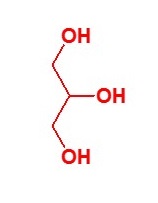
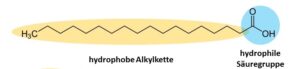
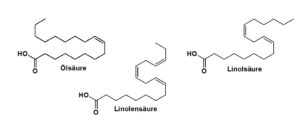
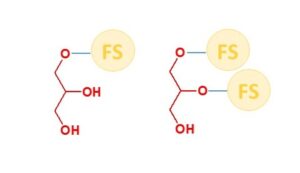
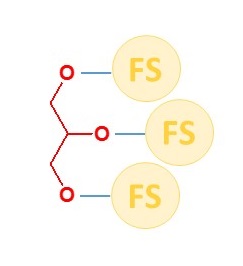 Abbildung 5: Schematische Darstellung der Struktur eines Fettmoleküls.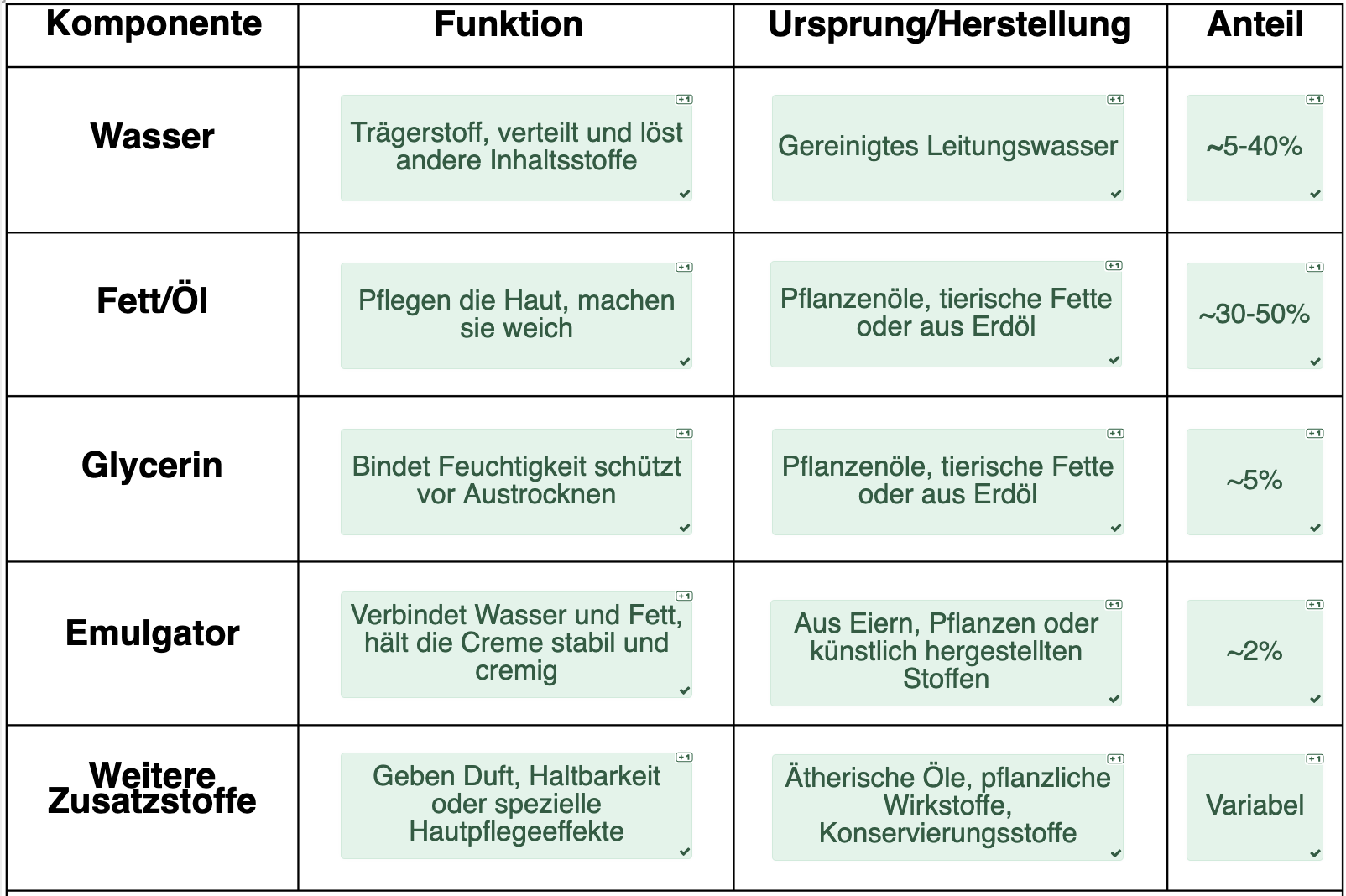
Do you want to make cream yourself?
Raw materials for cream
As can be seen in the table, some substances such as water and fats are easily accessible, while others, including glycerin and mono- and diglycerides, must be specifically produced through extraction, chemical reactions, or biocatalytic processes. The latter use enzymes – catalytically active proteins from nature that can specifically initiate and accelerate chemical reactions.
Petroleum
Petroleum is an important, but non-renewable raw material for the production of creams and many other everyday products. In creams, petroleum is primarily used as a base for certain fats and oils, consistency enhancers, as well as for emulsifiers and preservatives. These components ensure that creams are smooth, easy to apply, do not separate, and remain stable over a longer period. In addition to the cosmetics industry, petroleum also plays an important role in other industrial sectors, for example in the production of plastics, detergents, pharmaceuticals, and numerous other everyday products that are currently difficult to replace with alternative raw materials. However, the largest portion of crude oil produced worldwide is not used in the chemical industry but is burned as fuel, for example in the form of gasoline or heating oil. Less than 10% of crude oil is used for the chemical industry. Nevertheless, this proportion is of great importance, as important basic materials for many products are obtained from it. Given the enormous global consumption of petroleum and the CO₂ emissions released during its combustion, this raw material poses a growing environmental problem. To reduce dependence on fossil raw materials, alternative, more sustainable sources of raw materials are increasingly being sought, from which petroleum-based substances could be replaced.
Plate-Trough-Tank Conflict
However, the use of renewable raw materials brings its own challenges. To grow all the necessary plants, a correspondingly large agricultural area would be required. However, these areas are already intensively used for growing food and animal feed, as well as for livestock farming. This conflict is known as the plate-trough-tank conflict and has intensified in recent years due to rising food prices. Therefore, the most complete utilization of existing resources is increasingly coming into focus. One approach is to increasingly use by-products and residues, which have often been used as animal feed so far, as starting materials for sustainable production processes. While fossil fuels can increasingly be replaced by electricity and hydrogen in mobility, this is more difficult in the chemical industry. Here, carbon sources are essential, which is why plant-based raw materials and processes for recovering carbon from CO₂ are being researched as promising alternatives.
The difference between sustainable and conventional production methods is clearly illustrated by the example of cream production.