
To produce fruit juice, you need one thing above all: fruit. Which type of fruit is used is a matter of taste, of course. Enzymes play an important role in the ripening of fruit and thus also in the development of flavor. For example, the fruit’s own enzymes form aromas. However, for several decades, other enzymes have also been a firm part of the repertoire of a fruit processing company for technical purposes.
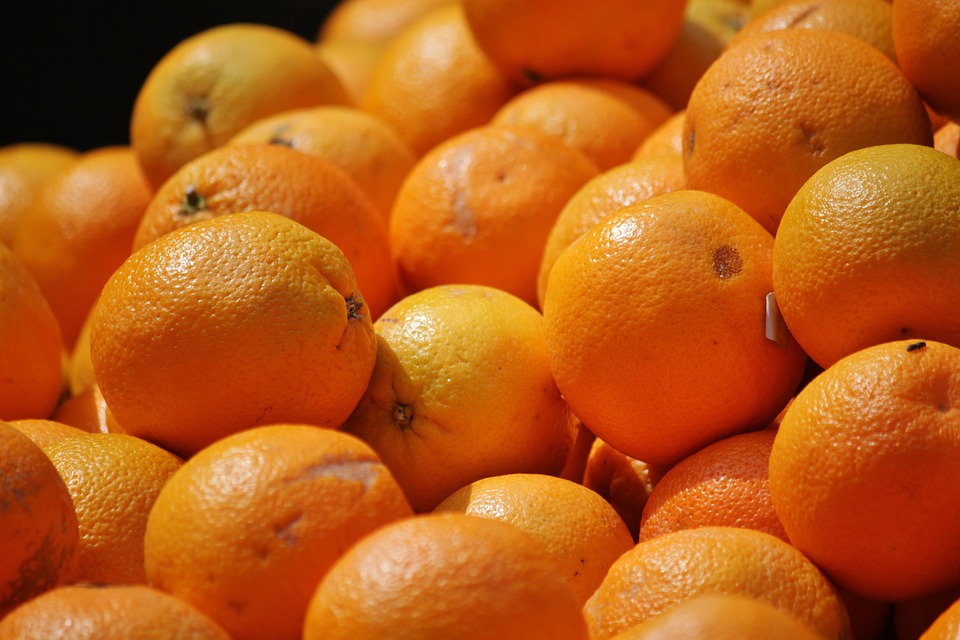
After harvesting, the fruits are washed and rotten fruits are sorted out so that only edible fruits are used in the juice. This has a major impact on the quality and shelf life of the juice. Infestation by microorganisms can lead to an undesirable accumulation of enzymes in the fruit. For example, too many of the fruit’s own pectinases can accumulate and break down the pectin released from the fruit. This is a problem in the production of cloudy juices, as the cloudiness is stabilized by a pectin network.
Why does an apple turn brown?
The typical browning of apples is also an enzymatic reaction. If you cut an apple at home, you will see that the cut surface turns brown after a short time. The basic principle of this reaction is the enzymatically catalyzed transfer of atmospheric oxygen to the polyphenol compounds of the fruit. This creates highly reactive intermediate compounds that, in a subsequent reaction, oxidize polyphenols to 0-quinones.
This reaction is desirable for the production of clear apple juice, as the juice develops a more pronounced apple flavor through oxidation. Juices produced in the absence of oxygen are tasteless.
However, in the case of cloudy apple juice, the oxidation must not proceed too far, as this can lead to undesirable precipitation of O-quinones with other components. To prevent this, the juice is pasteurized (heated) after a short time to stop the enzymatic activity (enzymes are deactivated with increasing heat). The addition of vitamin C can protect the juice from further oxidation.
Why are technical enzyme preparations used?
However, the enzymatic activity of the fruit’s own enzymes is not sufficient to break down interfering substances such as pectin, starch, and other macromolecular ingredients into their components within the available time.
To extract juice from these fruits, they are crushed and pressed after harvesting. Various enzymes are added to improve the juice yield or the processability of the fruits.
Below, we explain with a few examples which enzymes are used in the production of fruit juices and why this is necessary:
Pectinases
Breakdown of free pectin, which leads to the gelling of the fruit mash. This increases the juice yield when pressing the mash and improves the flowability of the mash. In some cases, pectinases can also be used to clarify cloudy juices. Especially in juice production from berries, the enzymes improve the extraction of color and flavor compounds. Pectinases are used in the food industry in many other processes related to fruit.
Pectin esterase
For the enzymatic breakdown of pectin esterified with methanol, it is necessary that the esterification is first broken down by pectin esterase; methanol is released in the process. The amounts of methanol produced in this way are completely harmless and are below the amounts that would be produced in the human stomach when consuming the fruits.
Polygalacturonase
Pectin is also referred to as polygalacturonic acid and consists largely of interconnected galacturonic acid molecules. Polygalacturonase is used to separate these from each other.
Rhamnogalactunorase
Rhamnogalacturonan is a long-chain polysaccharide and a component of pectin. It is a major component of cell walls and is broken down by the enzyme to increase filtration performance. Some filtration systems are sensitive to colloids that can form from rhamnogalacturonan.
Arabinase
Plant cell walls contain arabinose and can lead to undesirable cloudiness in high concentrations. These high concentrations occur particularly in the production of juice concentrates, where this enzyme is used.
Alpha-amylase
Breakdown of starch to prevent cloudiness caused by starch by breaking down starch that has gelled due to heating.
Protease
Protein breakdown to prevent undesirable cloudiness caused by proteins. Proteases are also used to clean filtration systems that are clogged by process residues.
β-glucanase
An accumulation of β-glucan increases the viscosity of the product due to the formation of hydrocolloids, thus making filtration or clarification difficult. To prevent the formation of these hydrocolloids, they are broken down with β-glucanase.
Hemicellulase
This enzyme is important for the breakdown of pectic substances that are bound to the pectin in the plant cell. This hemicellulose is part of the structure of the plant cell.
Xylanase
Used to achieve better cell lysis by breaking down the components of the cell walls.
Do you still have juice?
If you want to know more about fruits, juices, and smoothies, feel free to check out our Smoothie Mission!
Here’s to the Smoothie Mission