

Now you know how we grow and that our growth depends on available nutrients. But how exactly do we feed? And how have humans been using this ability of fungi for centuries?
How do fungi feed?
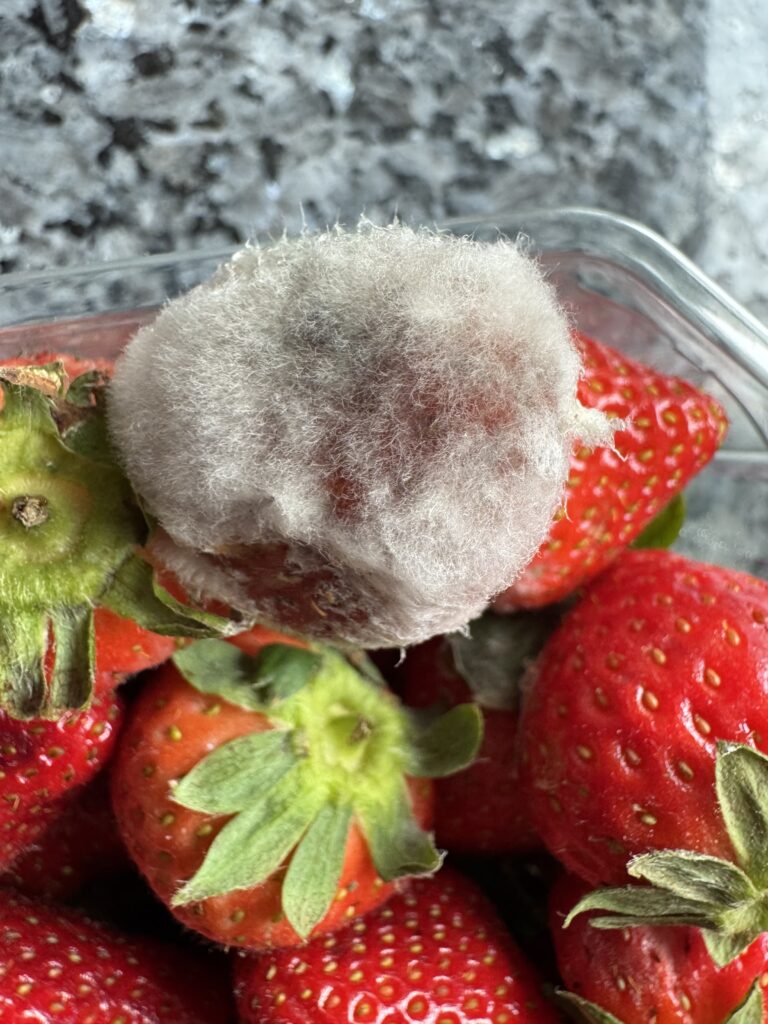
Fungi are fascinating organisms with a unique way of feeding. Since they cannot move, they must literally grow through their food to access new food sources. Depending on the species, they prefer different organic materials. Many fungi feed on dead plants and animals and play an important role as decomposers in nature. They help to break down dead material and return nutrients to the natural cycle. Molds, which we often encounter in everyday life as they grow on (old) food, also belong to this group of fungi. However, there are also fungi that feed on living organisms. Some form a symbiotic partnership with plants, like mycorrhizal fungi. They help plants absorb water and nutrients from the soil, while in return they receive sugars from the plants. Around 90% of all plants are connected to fungi through their roots. There is evidence that this symbiosis not only supports plant growth but may also play a role in communication between trees. But the relationship between fungi and other organisms is not always harmonious. Some fungi act aggressively and attack insects, for example, growing through their bodies and eventually killing them.
How do fungi absorb nutrients?
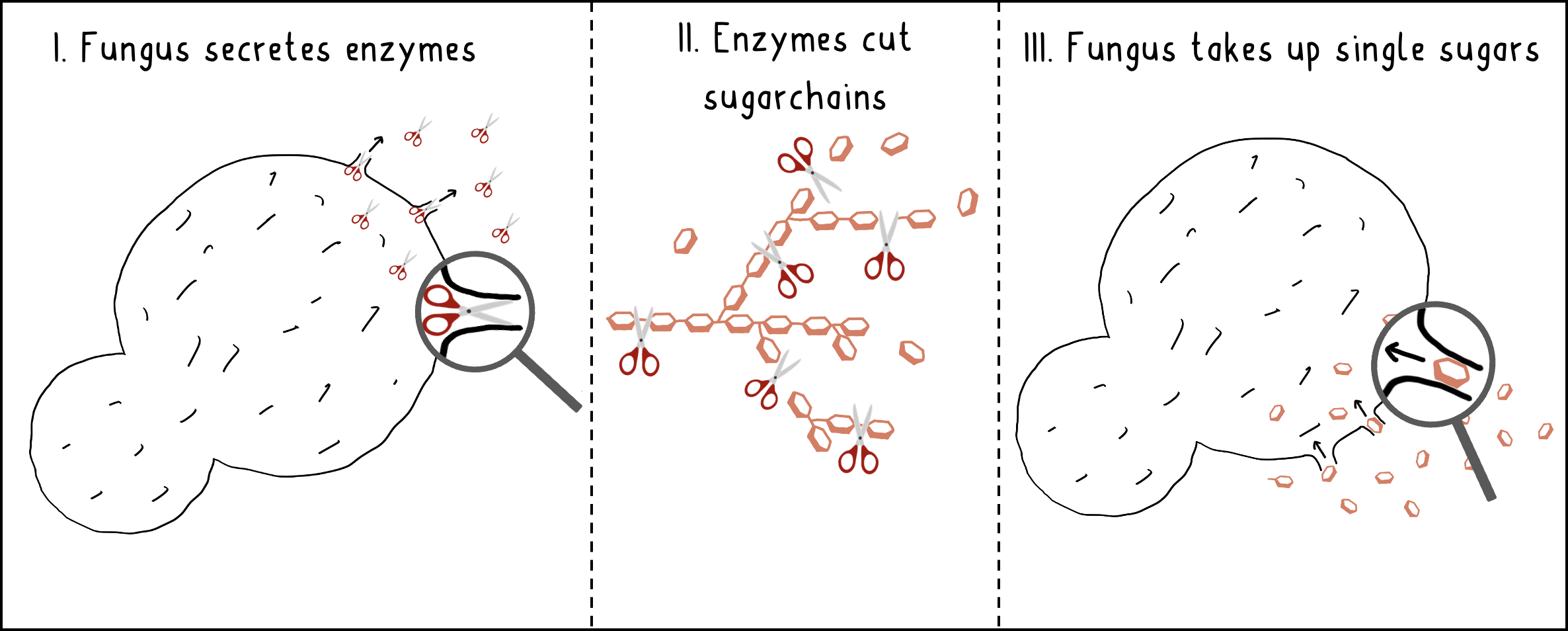
To absorb food, fungi must digest it outside their bodies. While humans break down their food by chewing and then process it further with enzymes in the stomach, fungi release enzymes into their environment. These enzymes break down large molecules into smaller ones that the fungus can then absorb. Fungi are highly specialized and, depending on the species, secrete only specific enzymes to break down specific materials. They can break down sugars, proteins, fats, and even the tough lignin of trees. This specialization shows how important a diverse mix of fungi is for the ecosystem, as together they can break down a wide range of organic material. But this ability is not only important for nature, but also for various production processes in different industries. Yeast and molds play a major role here.
How does humanity use the decomposition function of fungi?
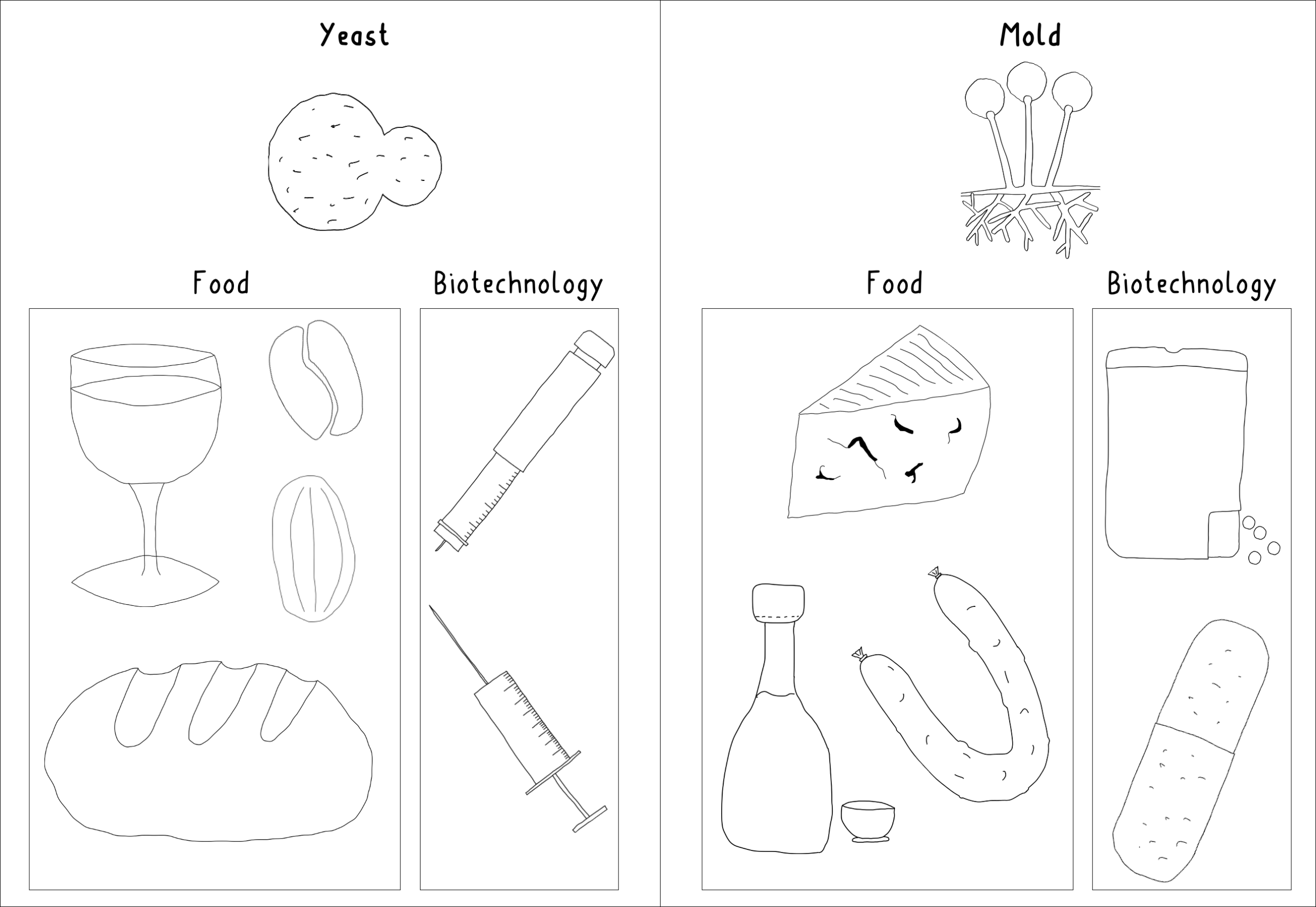
Fungi play an important role in industry because they break down substances and produce valuable by-products in the process (Fig. 2). This process is called fermentation in industry.
- The use of yeast fungi is particularly well-known. They secrete enzymes that break down starch. Starch consists of long chains of sugar molecules linked together. The enzymes secreted by yeast fungi break these long chains (starch) into individual sugar molecules. Ethanol (alcohol) and carbon dioxide (CO₂) are produced as by-products of sugar breakdown. This process is called alcoholic fermentation and is mainly used for the production of beer and wine. The carbon dioxide provides the effervescence of the drinks. Yeasts also play a major role in baking: during baking, the carbon dioxide produced loosens the dough, making bread and rolls nice and airy. The alcohol simply evaporates in the oven. Less known, but equally fascinating, is the role of yeasts in processing cocoa and coffee beans. They ensure that the sweet pulp of the beans is broken down – a crucial step that gives the beans their unique aroma and gives chocolate and coffee their characteristic taste. In addition to food, yeasts are also true helpers in biotechnology: through targeted genetic modifications, they can be induced to produce and secrete important substances such as insulin or vaccines.
- Another important group of fungi in industry are molds. Unlike yeasts, they can break down not only sugars but also fats and proteins. They are often used to produce specific flavors, for example in moldy cheese or soy sauce. A white mold layer also forms intentionally on certain types of salami. It breaks down fats and proteins into smaller components, intensifying the flavor. At the same time, it protects the salami from harmful microbes, i.e., tiny living organisms. In biotechnology, molds are also used, among other things, for the production of enzymes and antibiotics. Penicillium, responsible for the discovery of the first antibiotic (penicillin), is particularly well-known. Thus, they play an important role in medicine and research.
Fungi are therefore not only indispensable for the ecosystem but also for many areas of industry. They help in the production of food, support biotechnological processes, and provide important medicines. Their ability to decompose various materials makes them true all-rounders of nature and valuable helpers for humans.