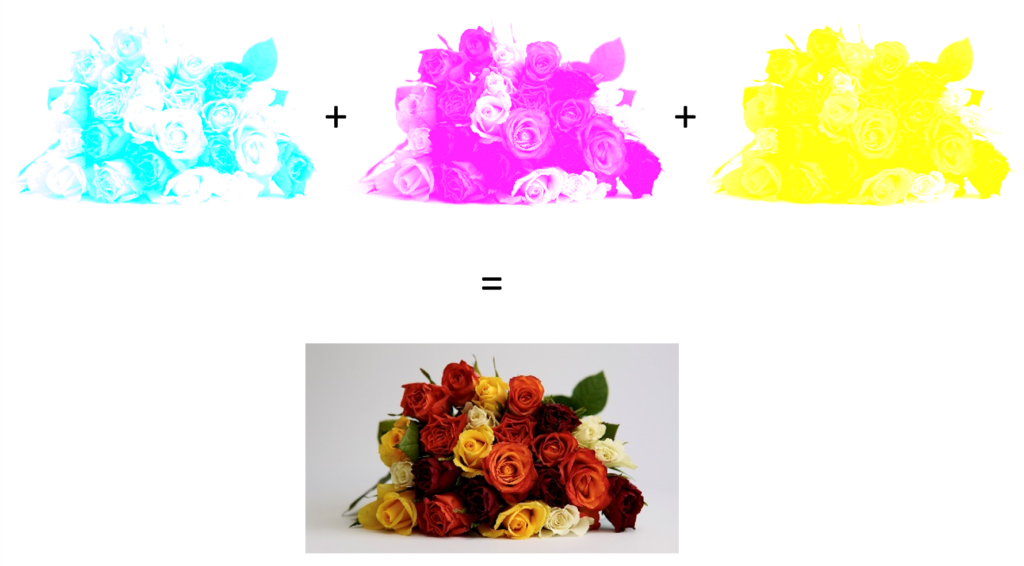

We’ve learned that our eyes have different receptors that respond to certain colors (see the excursus on the human eye). When several receptors are stimulated at the same time, our brain combines their signals into a mixed color. But when you try to mix bright new colors with watercolors, they often end up brown. Why is that?
There are two kinds of color mixing: Additive color mixing, which is how our color vision works, and subtractive color mixing, which you see when painting with watercolors. To explain the difference, we group colors into: Primary colors, which cannot be made by mixing other colors, and mixed (secondary) colors, which can be made by combining the primary colors.
Additive Color Mixing
Let’s first look at additive color mixing. To do this, we need to understand how our eyes see colors. If you haven’t read the excursus on the human eye yet, take a look at it first. Otherwise, let’s continue.
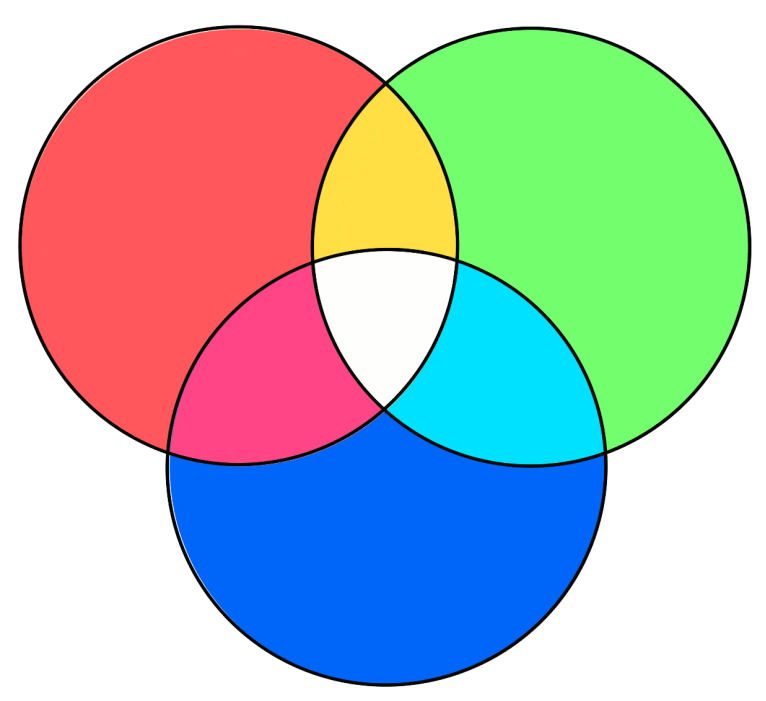
In the eye there are three main colors that the receptors on our retina are most sensitive to: red, green and blue. These are the primary colors of additive color mixing. When we look at an object in one of these colors, the matching color receptors in the eye are activated. For example, red light reflected from a red rose activates the red cones in our eyes.
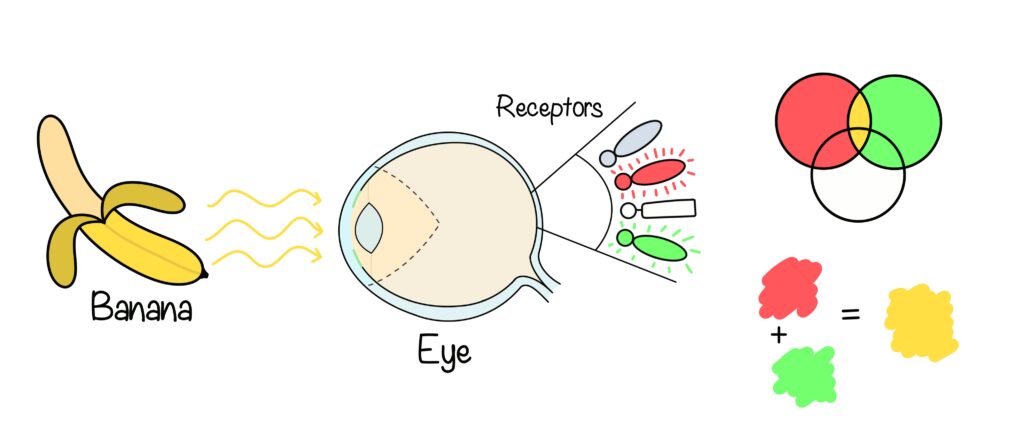
When we look at an object with a mixed color, like a yellow banana, the eye receives yellow light (about 580 nanometres). This light activates both the red‑sensitive and green‑sensitive cones in our eyes. The brain combines these signals to give us the sensation of yellow. So, when more than one type of cone is stimulated, we see mixed colors that sit between the primary colors on the color wheel.
If all three types of cones are stimulated, adding each color of light makes the image brighter. The brain then mixes the signals into white. That’s why, in the additive color‑mixing wheel, white appears in the centre.
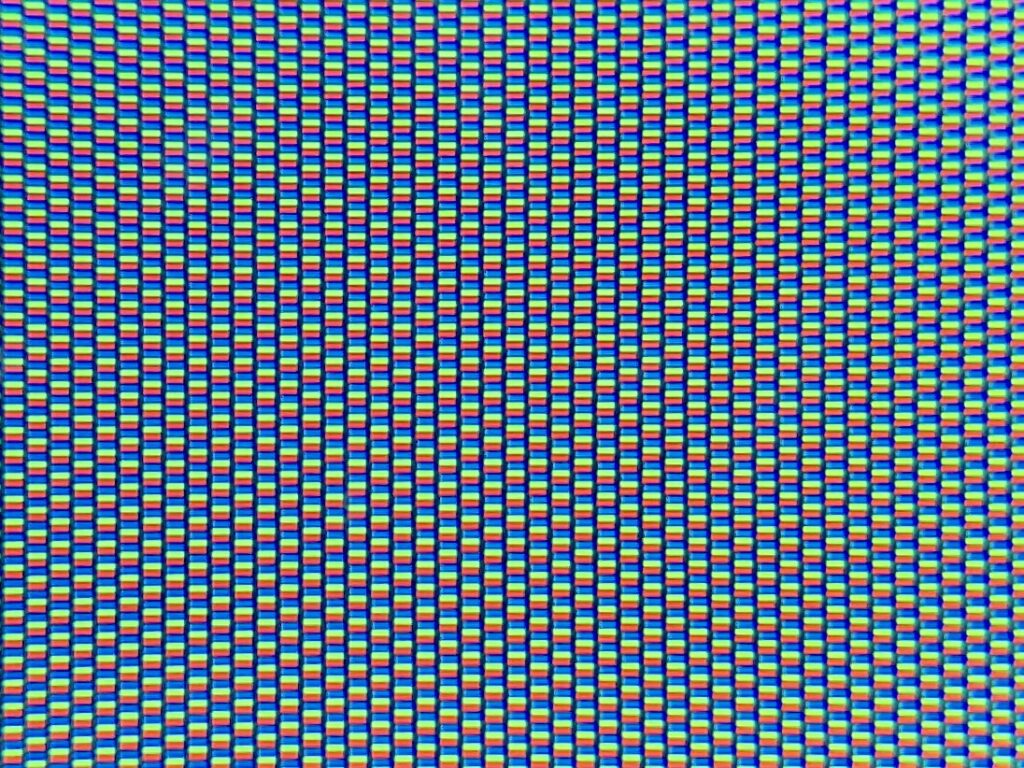
The principle of additive color mixing is also used in screens. Each dot on the display is made of tiny red, green and blue lights (pixels) that shine with different brightness. The pixels are so close together that your eye cannot see them separately, so you see the mixed colors instead.
Tip: If you go very close to an (older) TV, you might see the individual pixels. If not, here is a magnified photo of a screen.
Subtractive Color Mixing
In contrast to additive color mixing, subtractive color mixing makes the mixed color darker, the more colors you add.

You can try this with a watercolor set. If you have a clean glass of water and shine white light on it, it is clear at first. But if you add different watercolor paints one after another, the water gets darker with each color. Each paint you add filters out a certain color of light from the white light. If too many colors of light are filtered out, the solution becomes so dark that it looks almost black.
To make light mixed colors with subtractive mixing, we use different primary colors than in additive mixing. These primaries are magenta, cyan and yellow. When you mix two of these, you get a darker color that lies between them on the color wheel – for example, mixing cyan and yellow makes green. If you mix all three primaries, you get a dark brown or black.
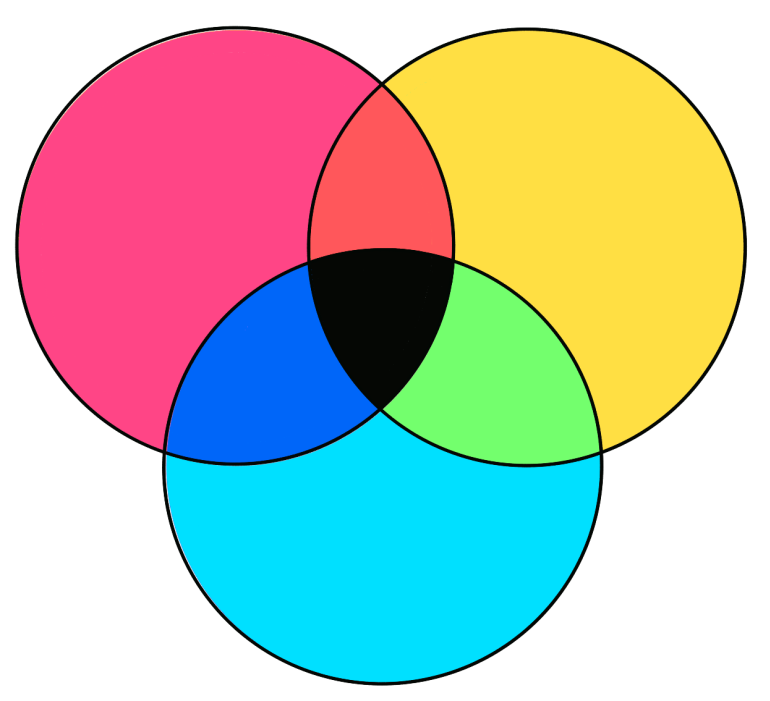
This is the principle used in many printers: the primary inks are printed on top of each other in different amounts to create the desired colors.