What is Technomathematics?
Definition
Technomathematics is the sub-discipline of mathematics that is closely linked to engineering sciences, computer science, and industrial applications. It deals with the mathematical modeling, analysis, simulation, and optimization of technical and scientific processes. Almost no modern product is designed, developed, or tested today without the use of technomathematical methods.
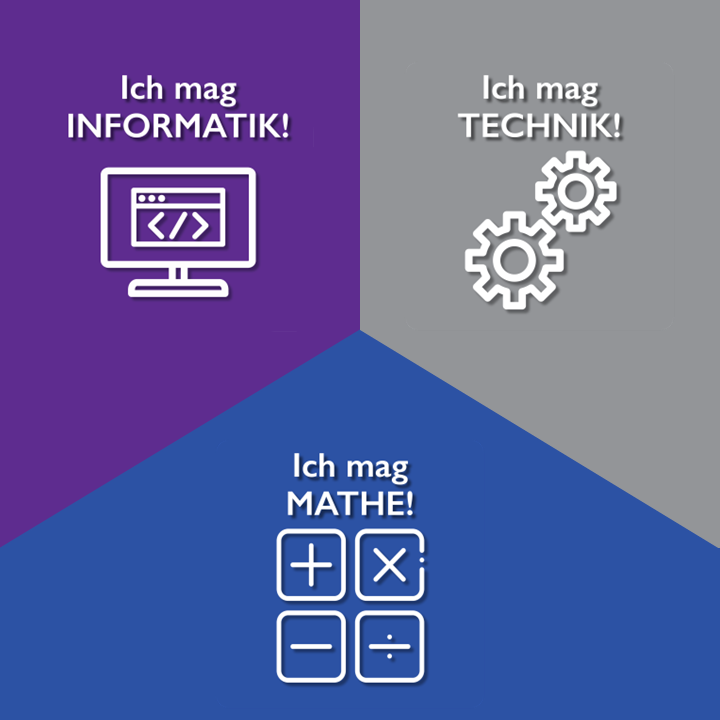
Technomathematics combines theoretical mathematics, practical application, and computer-based implementation, and is therefore considered a key technology of key technologies.
Process / Project Workflow
The typical workflow in technomathematics can be divided into several sequential steps:
1. Modeling (Mathematical Representation of Reality)
A real technical or scientific problem, e.g., a flow, a logistical process, or a communication system, is translated into a mathematical model, often using differential equations, stochastic models, or optimization approaches.
2. Mathematical Analysis
The model is theoretically investigated: existence of solutions, stability, accuracy, boundary conditions, or dependencies on parameters are analyzed.
3. Numerical Implementation on the Computer
Since many models cannot be solved exactly, numerical methods are developed that allow solutions to be calculated approximately on the computer.
4. Simulation, Evaluation, and Optimization
The calculated results are interpreted, compared with measurement data, and used for the optimization of processes or products.
5. Application and Collaboration with Engineers
The mathematical results flow directly into technical development, often in close interdisciplinary teamwork.
A bit more illustrative, please?
Technomathematics can be well compared to the work of an architect for invisible structures. Before a building is constructed, exact blueprints are created first. Similarly, technomathematics creates the invisible mathematical blueprints for technical systems.
For example, the airflow around an airplane is not tested directly in a wind tunnel but is first simulated using mathematical equations on the computer. Traffic flows, supply chains, medical imaging, or data transmission on the internet are also based on such mathematical models.
As with prototype construction in engineering, these models are continuously refined, tested, and adapted until they represent reality as accurately as possible. Only then are they used in practice.
Technomathematics thus combines abstract theory with tangible applications, making mathematics directly effective in the real world.
Overview of the different areas of Technomathematics
What exactly is Technomathematics? What is it like to study it at the Hamburg University of Technology (TUHH)?
In the Bachelor’s program Technomathematics at TUHH, you will learn how mathematical methods are used to understand, simulate, and optimize technical, scientific, and digital systems. You will build a strong foundation in calculus, linear algebra, numerical methods, and stochastics, and link this knowledge with applications from mechanics, electrical engineering, and computer science right from the start.
The program combines theoretical mathematics with engineering questions and practical implementation on the computer. You will develop mathematical models, analyze them, program numerical methods, and finally use them to simulate real processes. In this way, you will learn not only to apply mathematical tools but also to develop them further yourself.
The interdisciplinary structure is particularly characteristic: TUHH and the University of Hamburg (UHH) jointly design the program. The first semesters consist of mandatory foundational modules, after which you have great freedom of choice in areas such as imaging, fluid mechanics, optimization, machine learning, or telecommunications engineering. Through the close connection to engineering practice and possible collaborations with companies, you can apply your knowledge directly in real projects.
If you want to know what studying is like in everyday life, you can read student testimonials from the Technomathematics program.