
What is Chemical and Bioengineering?
Definition
Chemical and Bioengineering, also known as process engineering, is the engineering discipline that deals with the development and optimization of processes for material transformation. This involves changes in the composition, type, or properties of substances. This transformation is carried out purposefully in several steps and can encompass chemical, physical, as well as biological processes. The goal is to produce products that exhibit specific properties and qualities. A major focus is placed on the efficiency of the processes to make them economically viable and sustainable.
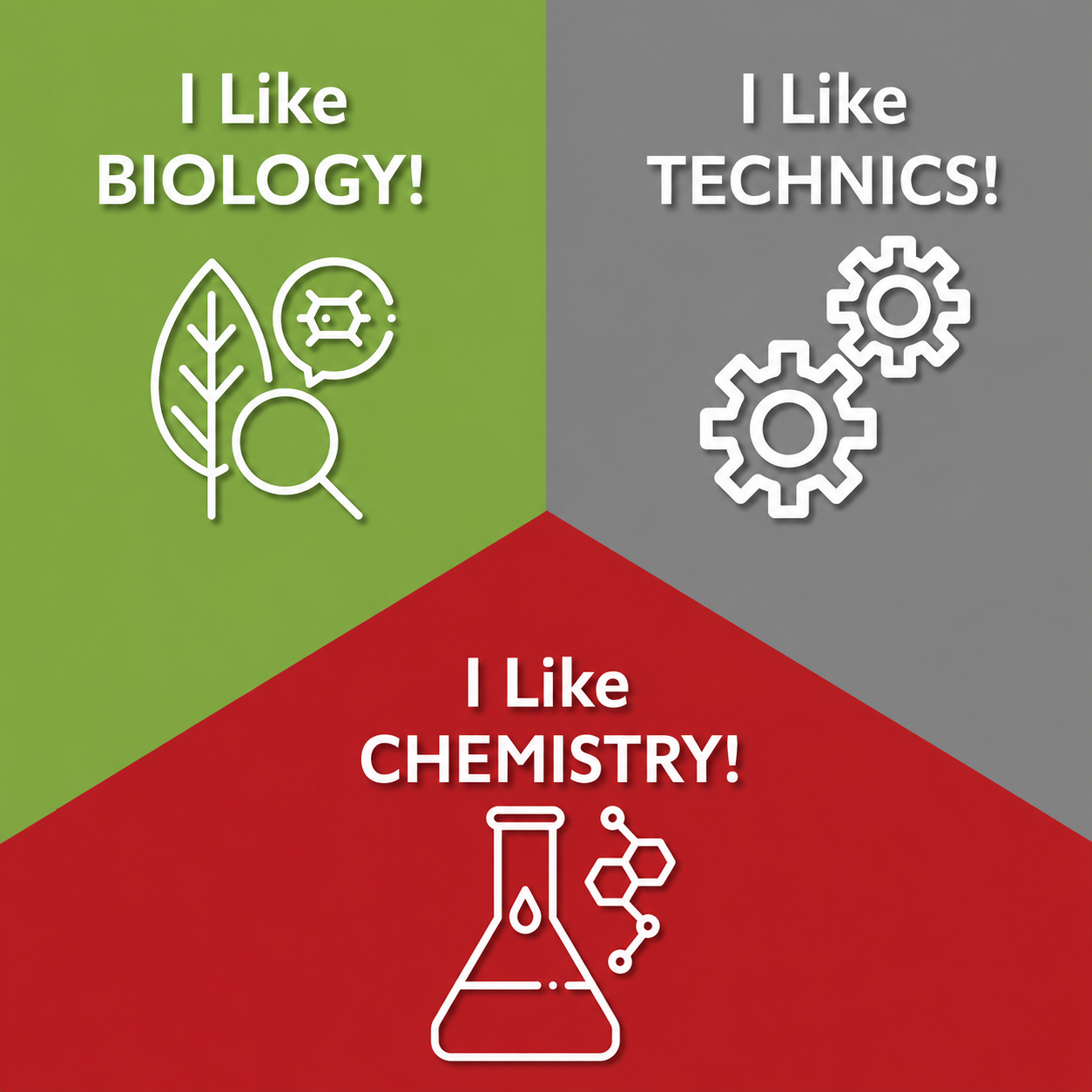
Process Flow
The process of material transformation is typically divided into two main phases:
Upstream processes: These involve the preparation and treatment of raw materials. This includes steps such as grinding, mixing, dissolving, separating, or general preparation of the starting materials.
Downstream processes: These comprise the processing and refinement of intermediate and final products. This includes separation of product mixtures, purification, drying, and packaging.
A more illustrative explanation, please?
Process engineering can be illustratively compared to a kitchen or a laboratory. In a kitchen, ingredients (raw materials) are transformed into dishes (products) through various cooking techniques (processes). Here, the individual steps must be precisely coordinated to achieve a successful final product. Upstream steps include, for example, washing and cutting ingredients, while downstream steps might involve removing spice bags, garnishing with chives, or simply plating and serving.
However, a significant aspect of process engineering is the so-called scale-up, which is the transfer of processes from small laboratory or pilot plants (private kitchen) to large-scale industrial production facilities (canteen/cafeteria). This step is particularly challenging because processes do not always behave linearly and require special adjustments to function safely, efficiently, and economically on a larger scale.
Process engineering is a key technology used in many industries, including chemistry, pharmaceuticals, food technology, and environmental engineering. It enables the efficient and sustainable production of products that are indispensable to our daily lives.
Overview of the different areas of process engineering
Chemical Process Engineering
Basic Operations/Tasks
- Reactor design
- Catalyst development
- Determining optimal reaction conditions (pressure, temperature, concentration, reaction time, catalyst, reaction kinetics)
Industrial Applications
- Synthesis of chemicals (e.g., ammonia synthesis for fertilizers)
- Petrochemicals (e.g., cracking of crude oil)
- Production of polymers (e.g., polyethylene and polypropylene)
- Production of fine chemicals and pharmaceuticals
Biotechnology Process Engineering
Basic Operations/Tasks
- Fermentation: Use of microorganisms (e.g., bacteria, fungi)
- Determining optimal fermentation parameters (pH, temperature, oxygen supply)
- Development and use of enzymes for the production of specific products
Industrial Applications
- Production of antibiotics (e.g., penicillin)
- Production of biofuels (e.g., ethanol, biogas)
- Food industry (e.g., fermentation of dairy products)
- Production of enzymes for laundry detergents
Thermal Process Engineering
Basic Operations/Tasks
- Distillation: Separation of fluid mixtures based on different boiling points
- Extraction: Separation of substances using a solvent
- Absorption: Absorption of gases by a scrubber
- Adsorption: Absorption of a fluid onto the surface of a solid
- Drying: Removal of moisture
- Crystallization: Separation of a crystalline product from a solvent
- Membrane technology: Separation of a fluid mixture using a membrane
Industrial Applications
- Crude oil refining and spirits production
- Extraction of plant extracts
- CO₂ capture
- Activated carbon filters
- Paper manufacturing
- Sugar refining
- Seawater desalination
Mechanical Process Engineering
Basic Operations/Tasks
- Grinding: Reduction of the particle size of solids
- Agglomeration: Combining smaller particles to form larger agglomerates
- Mixing: Homogenization of solid, liquid, or gaseous substances
- Separation: Removal of solids from liquids or gases
Industrial Applications
- Wastewater treatment
- Mining (e.g., ore grinding)
- Food industry (e.g., grain milling)
- Pharmaceuticals (e.g., tablet manufacturing)
- Wastewater treatment
What exactly is Chemical and Bioengineering? What is it like to study it at the Hamburg University of Technology (TUHH)?
If you want to find out, watch the following interview films, for example, the two interviews with five students of the Chemical and Bioengineering degree program at TUHH or the individual interviews.

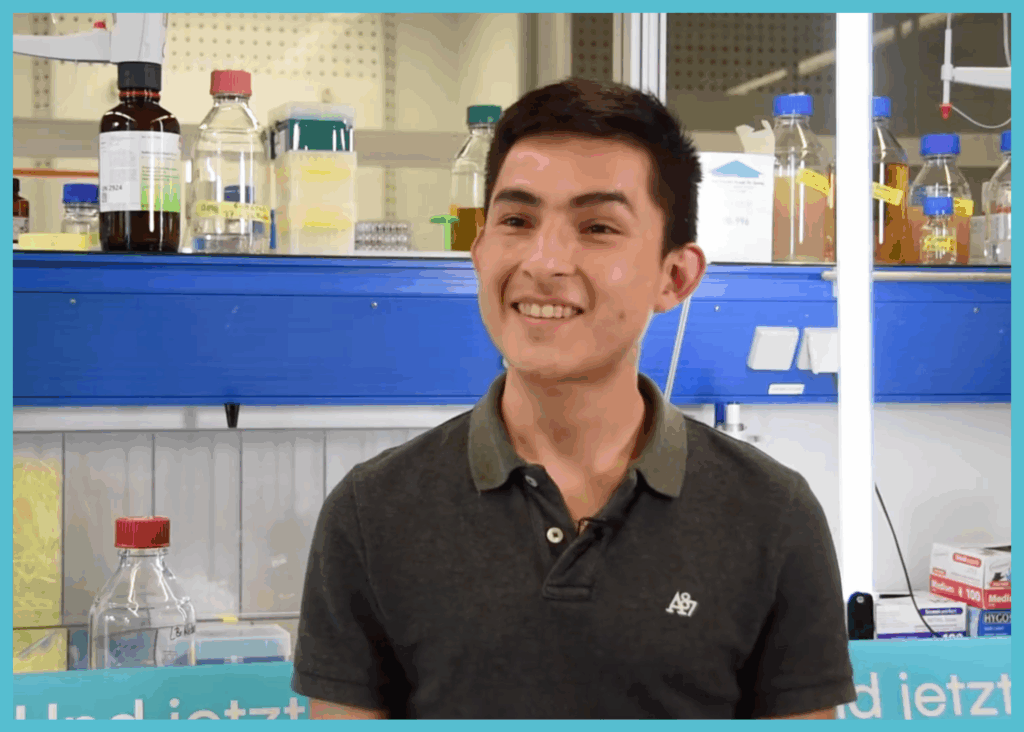
Vico provides insights into his bachelor’s thesis on aerogels and his motivation for studying Chemical and Bioengineering.
Fernando, a research associate at the Institute of Technical Biocatalysis at TUHH, explains what the “Chemical and Bioengineering” degree program at TUHH entails.


Victoria studied bioprocess engineering (now known as bio- and chemical engineering) at the Technical University of Hamburg and is also a gifted Girl Scout. She explains why she chose to study at a technical university and what she likes so much about bioprocess engineering.
Basti studied process engineering (now known as chemical and bioengineering) at the Technical University of Hamburg. In this video, he explains why he chose this major, what fascinates him about the scientific and technical aspects of the field, and why process engineering is an indispensable part of our everyday lives. He also reveals what his studies have to do with beer production.