What is Data Science?
Definition
Data Science is an interdisciplinary scientific discipline that deals with the systematic analysis, processing, and interpretation of large amounts of data to derive knowledge, patterns, and predictions. It combines methods from statistics, computer science, and a respective application domain to develop data-based models that represent real-world processes and relationships. Modern algorithms are used to extract relevant features from so-called Big Data and make them usable for humans and machines.
The goal of Data Science is to enable informed decisions, optimize processes, and gain new insights, taking into account data security, ethics, and responsible data handling.
Project Workflow
The typical workflow of a Data Science project can be divided into several consecutive phases:
1. Data Collection and Preparation
Here, data is collected from various sources, cleaned, structured, and prepared for analysis. This includes steps such as removing erroneous values, merging different datasets, and selecting relevant features.
2. Modeling and Analysis
In this phase, statistical methods, machine learning techniques, or AI algorithms are used to extract patterns, relationships, or predictions from the data.
3. Interpretation and Application
The results are evaluated, visualized, and applied in practice, e.g., in the form of decision support tools, forecasts, or automated systems.
A more illustrative explanation, please?
Data Science can be illustratively compared to the work of a detective. First, many clues are collected (data), which are initially unorganized and partly unreliable. These clues must be sorted, checked, and prepared. Then, the detective looks for patterns, relationships, and suspects (models and algorithms) to finally draw a well-founded conclusion (result or prediction).
An example from everyday life is the navigation app: first, numerous traffic data are collected, then evaluated and processed to calculate the fastest route. Voice assistants, weather forecasts, streaming recommendations, or medical diagnoses are also based on precisely these data-driven processes.
A central aspect of Data Science is the transferability of models to new data. A model that works well in the lab with test data must also prove itself in real-world application.
Today, Data Science is a key technology that finds application in almost all areas of our lives, including medicine, business, logistics, environment, mobility, and industry.
Overview of the different areas of Data Science
Statistical Data Analysis
Basic Operations/Tasks
- Collection, cleaning, and structuring of data
- Descriptive statistics (means, variance, distributions)
- Exploratory Data Analysis (EDA) for pattern recognition
- Hypothesis testing and significance analysis
Practical Applications
- Market research (customer behavior, purchase predictions)
- Quality control in industry and production
- Medical studies (efficacy of drugs)
- Economic risk analyses
- Analysis of surveys and social data
Machine Learning and Artificial Intelligence
Basic Operations/Tasks
- Development and training of learning algorithms
- Supervised learning (e.g., classification, regression)
- Unsupervised learning (e.g., clustering, dimensionality reduction)
- Deep learning and neural networks
- Model optimization and validation
Practical Applications
- Speech and image recognition
- Recommendation systems (streaming, online shops)
- Autonomous driving and driver assistance systems
- Fraud detection in finance
- Medical diagnostic systems
Data Management and Databases
Basic Operations/Tasks
- Storage of large amounts of data (“Big Data”)
- Design and management of databases
- Data integration from various sources
- Data cleaning and backup
- Ensuring data privacy and data security
- Efficient querying and processing of large datasets
Practical Applications
- Cloud services and data centers
- Enterprise databases (e.g., customer and product data)
- Smart cities and sensor networks
- Digital administration (e-government)
- Health data management in hospitals
Visualization
Basic Operations/Tasks
- Visualization of large and complex datasets
- Development of interactive dashboards
- Selection of suitable chart and display formats
- Preparation of analysis results for different target groups
- Data Storytelling
- Clear communication of statistical results
Practical Applications
- Management dashboards in companies
- Real-time visualization of production data
- Reporting in media and journalism
- Monitoring of traffic, energy, or environment
- Presentation of scientific results
What is Data Science actually? How can one study it at the Hamburg University of Technology (TUHH)?
In the Bachelor’s program in Data Science at TUHH, you will learn how modern algorithms work and how you can not only apply them but also develop them yourself. You will acquire sound mathematical and statistical foundations, combine them with computer science knowledge, and apply your knowledge practically to real datasets.
The program is highly practice-oriented, offers a variety of elective modules in different application areas (e.g., medicine or logistics), and also imparts important skills in the areas of data security and ethics. Since the program is fundamentally structured as a computer science degree, many Master’s programs with a computer science focus are open to you afterward.
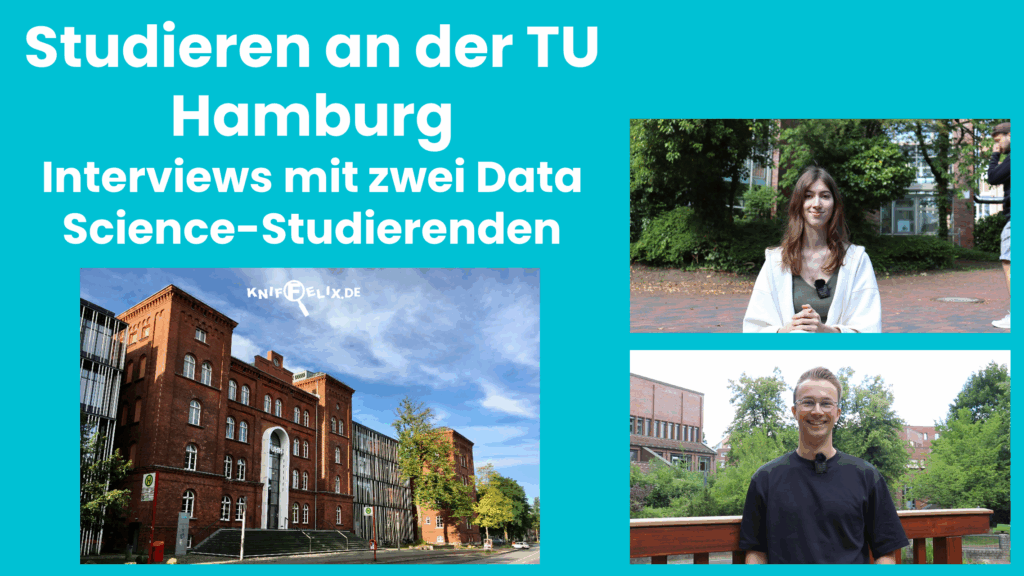
If you want to find out what the studies are like in everyday life, take a look at the following interviews with students of the Data Science program at TUHH.